
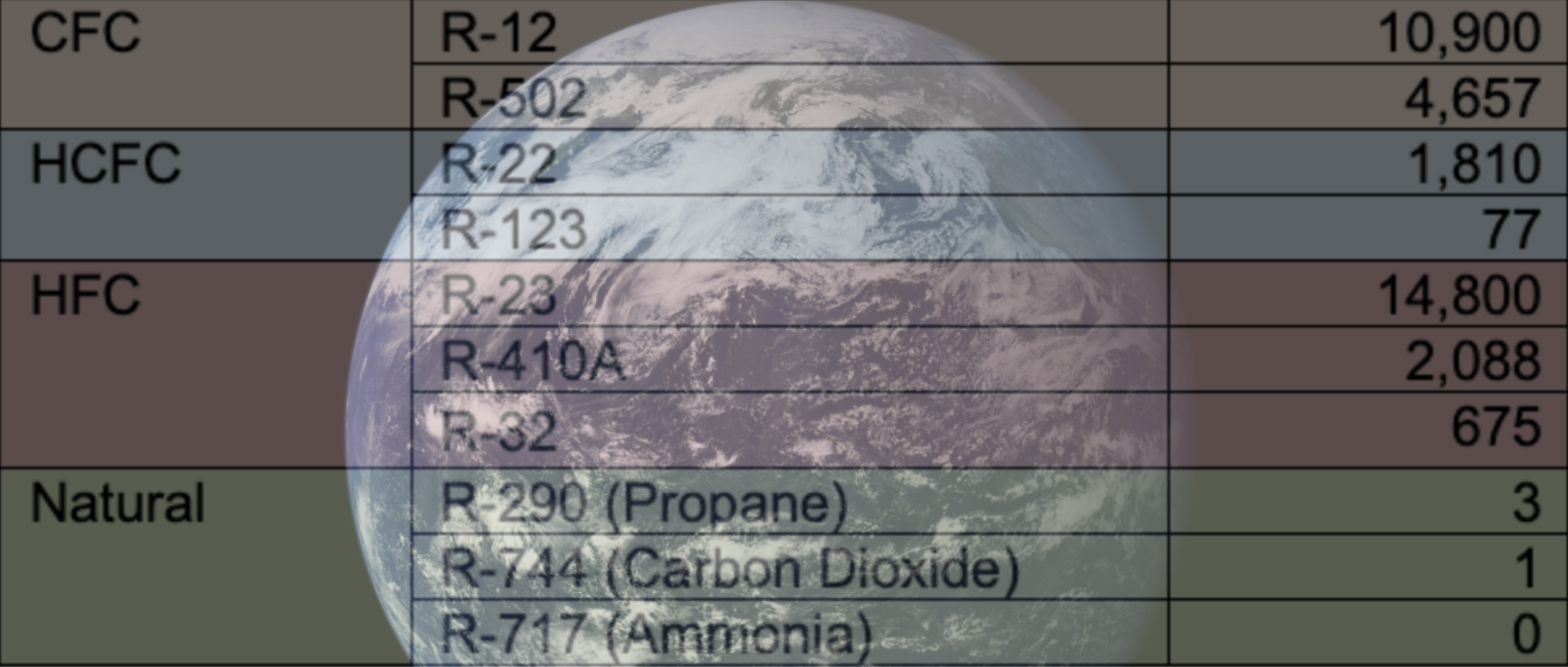
In 1987, author Frank White coined the term “Overview Effect” after interviewing NASA astronauts. It describes the disorienting experience of seeing Earth from space: A lone, living fragile planet in a sea of empty space. From that vaunted perspective, the atmosphere’s boundary layer was clear and visible. Artificial boundaries disappeared into a unified whole behind that thin blue veil. The image became iconic, used to stoke collective imagination and inspire care and stewardship for the rare, life-giving planet we get to call home. That same year, the Montreal Protocol was created to stop the damage CFCs were doing to the ozone later.
In 1999, a British geographer gave a name to the distance between what people say they value and what they do with daily habits, focus and choices, calling this the “Value-Action gap”. It challenged the notion that more facts and education will change behavior on their own. In the building industry we see this sometimes arise as the gap between design intent and outcome.
In California and elsewhere, we’re seeing efforts to close that gap. The actions it takes trickle down from global vision to state impact and finally, unglamorously into the vernacular of codes and standards. That is exactly where these changes need to land if we are to clear the structural, social and personal barriers that insulate the value-action gap.
We hear a lot about how CO2 traps heat in our atmosphere. What really matters is where CO2 ends up and how much of it accumulates. In an ironic turn, the same gas is now one of a host of natural refrigerants replacing far more potent refrigerants with higher global warming potential (GWP).
The atmosphere teaches us how dynamic and delicate the systems are that keep conditions right for life. Those same lessons now inform how we design the systems that balance the conditions of comfort in our built spaces. Heat waves are reaching places that never needed air conditioning, and California has set a goal of installing 6 million heat pumps by 2030. Out in the field, the push for efficient heat pump technology brings a second shift with it, on the refrigerant side.
We once moved away from ozone-depleting refrigerants with CFCs to ones that protected the ozone layer but trapped heat (e.g., R-410a), solving a problem as we understood it at the time, while creating a new one that would take time to recognize. In 2016, the Kigali Amendment brought those hydrofluorocarbons (HFCs) under the Montreal Protocol, and their phasedown began. Natural refrigerants, which are already in use in commercial applications, contain no CFCs or HFCs, and we are starting to see smaller, residential scale systems emerging that are making use of these natural refrigerants.
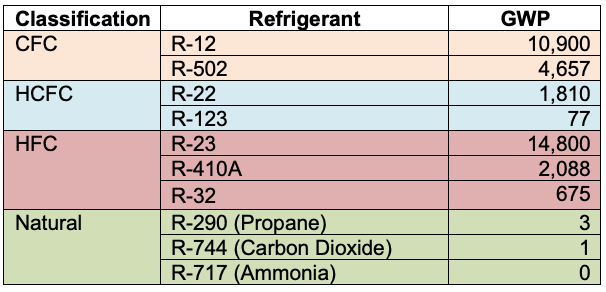
As R-410a phases down, the mainstream replacements are lower-GWP synthetics like R-32 and R-454b. Alongside them, natural refrigerants are moving into smaller equipment: carbon dioxide (R-744), propane (R-290) and ammonia (R-717). The difference in climate impact is stark. R-410A, again, the refrigerant used in most home air conditioners and heat pumps installed over the past sixteen years, itself replacing ozone-depleting R-22, has a global warming potential of about 2,088. CO2 by contrast, has a GWP of 1.
A HERS rater on a whole-home renovation in Encinitas once put air sealing this way: Imagine every small leak in a house as a straw. On its own, one straw barely matters. Gather them into a bundle, and you can see what a leaky house adds up to and how much energy use is escaping along with it. The analogy carries even more weight with refrigerants. Millions more heat pumps mean millions more refrigerant loops, each with potential to leak a little at installation, through years of service, and at the end of its life. That’s why the state’s push for 6 million heat pump installations by 2030 is paired with a push to change what’s inside them.
Regulations, standards, and codes do different things. Regulations govern refrigerants and environmental rules, and they take effect at the point of sale. Standards cover product safety and installation and aren’t enforceable until a code adopts them. Codes include the adopted mechanical, building, and fire codes. These are the instruments of navigation. All of this can feel unglamorous, and as challenging as any change to the status quo. But this is how a broad vision from the state reaches the details of implementation. It’s how we bring big ideas to fruition and use the weight of the world's fourth largest economy to think about the impacts of our intentions and our actions.
These times call for this kind of thinking, this level of effort and the ability to bridge big, wide-ranging and conceptual ideas with adoption and practice that continues to shrink the gap. They ask us to look again at the assumptions below our blueprints. To think as carefully about byproducts, intentions and the processes they touch, as we do about the components we design and build. Thinking beyond our efficiency targets helps proactively look towards what comes next with a deeper understanding of these systems. Ours is the only life-giving planet we know of. The lesson of our era is to design in responsible participation, with a deeper understanding of these systems and a broad mandate in defining the scope of healthy design.