Looking at Options for Unvented Attics

Here at In Balance Green Consulting, we have received an influx of questions about fire-resistant assemblies for attics, particularly unvented attics. While this is a complex topic with many nuances, we’ll provide an overview of the options and what to look out for.

What’s this stemming from? Unvented attics have been a topic of roof assembly energy performance for a while due to the idea of creating a “conditioned attic” that can benefit the HVAC system and reduce heating and cooling loads. In addition, recent evidence from California wildfires has shown that high winds carry embers across residential areas, sometimes finding eave vent openings, which can contribute to causing the scattered ignition pattern of homes often seen.

Before we dive in to unvented assemblies, note that vented attics are still a code-compliant option. If using that approach, vents should be adequately screened to prevent embers from entering the structure. Screens at the ridge, eave, gable or roof plane should have openings 1/8” or smaller and/or vents should automatically close when fire is present.

Unvented Attics

For an unvented attic, the basic premise is that there are no openings and the assembly is air sealed to keep desired heating and cooling inside the home while blocking smoke and embers from coming in. An unvented attic, however, could end up with moisture issues and condensation if not appropriately mitigated, so the building code dictates how an unvented attic is to eliminate or greatly reduce the risk of moisture build up, depending on the type of insulation that is used.

Which brings us to an important material choice that dictates the rest of the assembly: Foam or No Foam.

Foam or No Foam
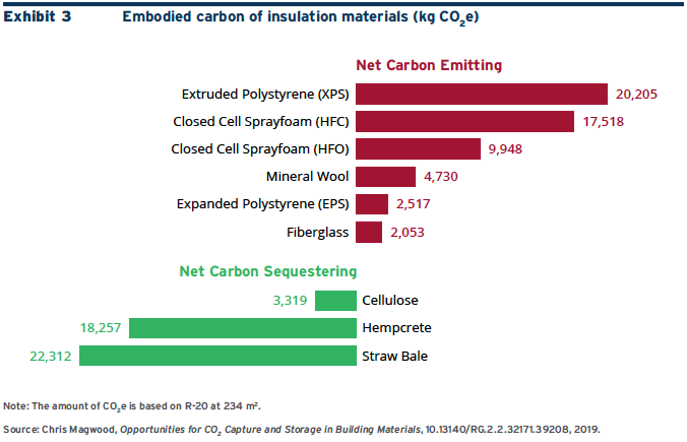
Many of the homeowners that reach out to us don’t want foam, because they are concerned about flammability if it does catch fire, and/or they are concerned about the environmental impacts of the foam itself.

For a foam assembly, it’s pretty straightforward: 2 inches of a closed-cell foam (“air impermeable”) on the underside of the roof sheathing serves as thermal insulation and as an air barrier, so vapor won’t build up and condense. Additional air-permeable insulation such as fiberglass batt or blown-in cellulose can be added to build up to the desired insulation level. 

Non-foam Attic Assemblies

For a non-foam assembly, on the other hand, we don’t currently have a ‘pretty straightforward’ solution, but here is an approach being used to meet code and reduce the risk of moisture build up.

Using mineral wool insulation (e.g., Rockwool) as an example, we note it is air-permeable, and thus the code (and best practices) require that we have a way to eliminate unwanted moisture or vapor from collecting at the peaks of our attic. The issue is that moisture laden air or vapor can collect at the peaks and ridges, and during certain times of the year that moisture can condense on the underside of the roof sheathing causing the sheathing to degrade. 
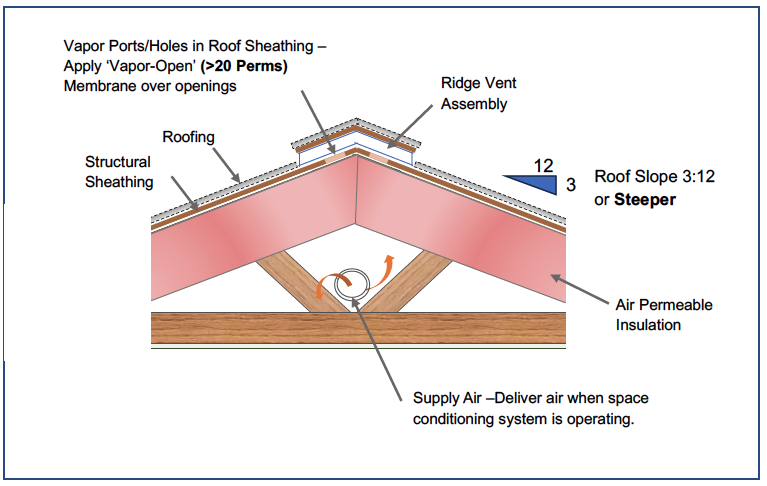
Conceptual Approach: Semi-Conditioned Un-Vented Attic with Vapor Diffusion Port at Roof Ridge

To address this concern, the current ICC and California residential building codes, specifically 2025 Residential Code Title 24 Part 2.5, R806.5, require vapor ports to be installed at the ridge or peaks of the roof for unvented attics with air-permeable insulation. The vapor ports can be detailed similar to ridge venting, but instead of having a direct opening into the attic via the ridge vent, the vapor port uses a “vapor open” (perm rating >20) product that covers or protects the opening. Vapor can escape, but heating and cooling stay in and embers stay out.  

Another requirement in R806.5 is that unvented attic spaces be “semi-conditioned”; in other words, have a small supply duct from the HVAC system installed, thus helping to temper and dry the air in the attic. Specifically, 50 cfm per 1,000 SF of ceiling area should be supplied to the attic with the conditioning system.

Evolving Understanding

Building science and building codes are evolving in this area. For example, since the code was adopted, best practices and further research has shown that for many climate zones the code-required vapor port opening be at least doubled and in some humid climates doubled again.

Given California wildfire concerns and other environmental goals, we are seeing a new interest in unvented attic assemblies where homeowners do not want foam products. Our team continues to explore products and practices, working toward solutions that meet sometimes competing objectives.

We welcome your questions and feedback!
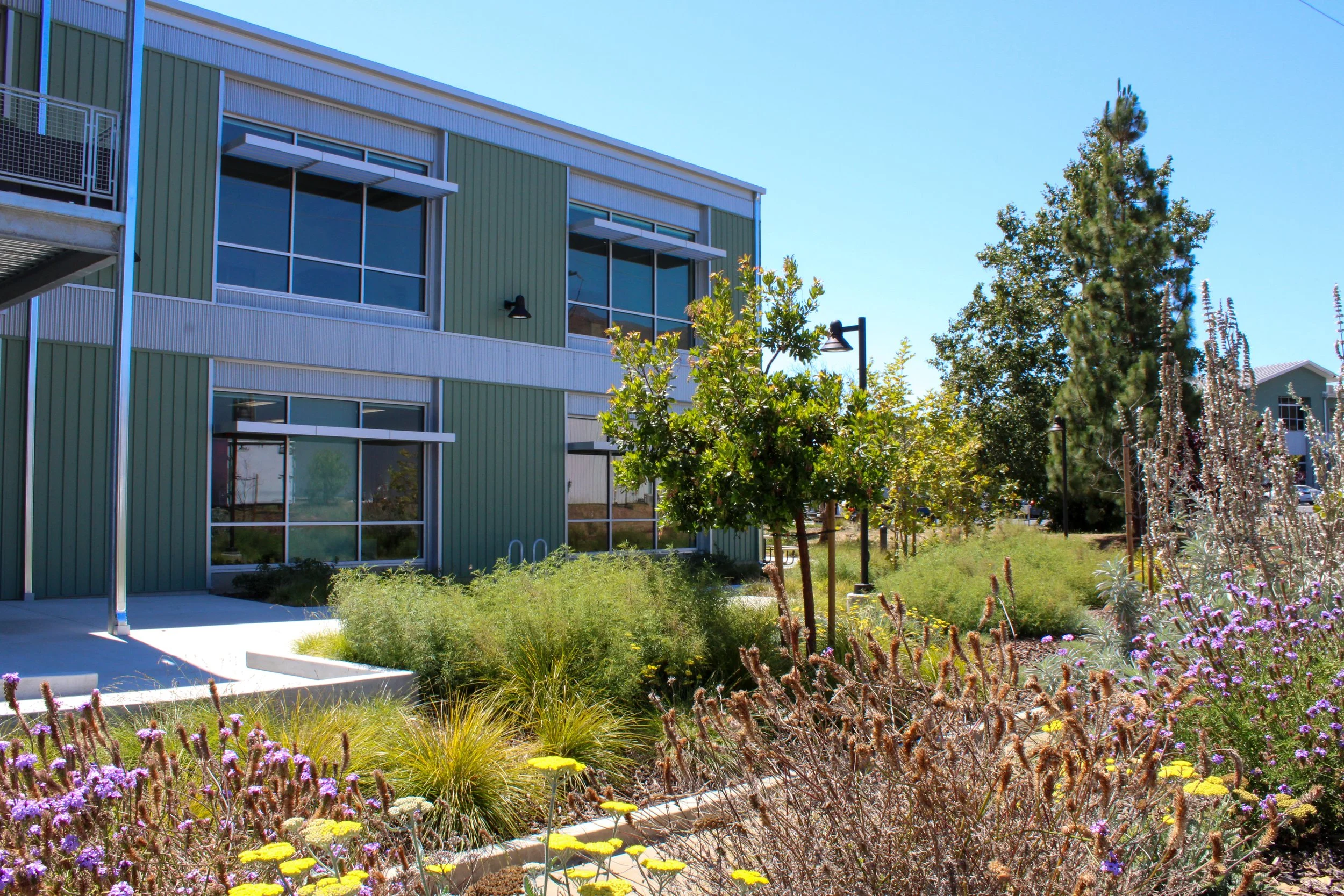
Cal Poly Tech Park Earns LEED Silver

Cal Poly San Luis Obispo recently opened Tech Park 2, a LEED Silver certified building at the Cal Poly Technology Park. According to Cal Poly Partners, the new two-story, 16,200-square-foot facility “is designed to enhance collaboration between Cal Poly students and industry partners while advancing the university’s Learn by Doing mission.”

Tenants in the building include SLO County Fire/CAL FIRE, the Cal Poly Wildland-Urban Interface Fire Institute, the U.S. Geological Survey California Water Science Center, Harrow Services – Career Consulting and The Forward Thinking Company.

Sustainability features include an energy efficient envelope and glazing, all-electric systems, great daylight and views and utilization of the campus’s large photovoltaic system to offset more than 50% of its energy use.

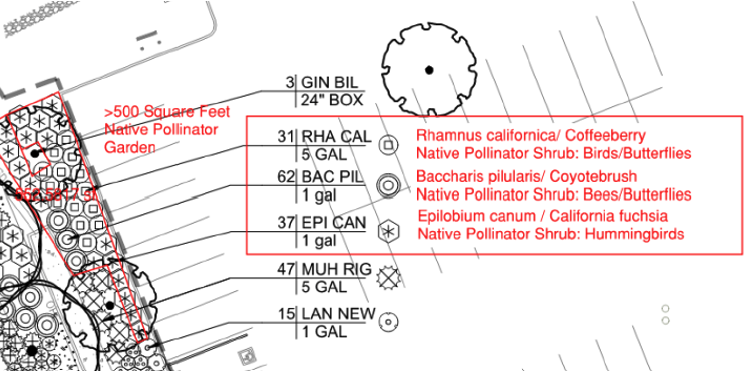
Notably, the project also earned 8 of 10  LEED points in the Sustainable Sites category. Rainwater is managed on site, routing to natural bioswales and allowing the water to recharge the groundwater. Exterior lighting is shielded to prevent night sky pollution. The roof and paving are light colored to reflect light and reduce the heat island effect. And the landscaping consists of native and adapted plant species, including special areas designed to attract butterflies, bees and other native pollinators.

Congratulations to everyone on the team!

  • Owner: Cal Poly Partners

  • Architect: 19-Six

  • Builder: AMG

  • Landscape Architect: KTUA

  • Civil Engineer: DPSI

  • LEED Administration: In Balance Green Consulting


Andy Pease Receives Civic Leadership Award at USGBC-CA Conference

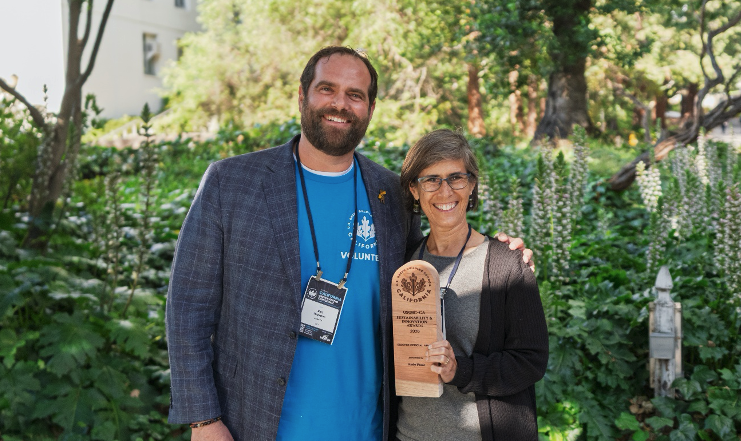
On May 28, 2026, at its 25th Annual California Green Building Conference, USGBC California (USGBC-CA) presented their annual Civic Leadership awards, including one to In Balance Green Consulting Principal, and former City Council Member, Andy Pease.

USGBC-CA CEO Ben Stapleton presented the award with the following comments:

Elected Official Award: Andy Pease, AIA, LEED AP BD+CThe award recognizes bold leadership in sustainability from the political and public service sector. Former City Council Member, San Luis Obispo, Andy is co-owner of In Balance Green Consulting, which optimizes green building strategies in the Central Coast region, including LEED administration and certification services, energy performance modeling and water conservation strategies. During her eight years on city council, the City of San Luis Obispo achieved milestones in housing construction and affordability, bike and pedestrian-focused infrastructure, new programs for inclusion and belonging and an innovative Climate Action Plan that targets carbon neutrality by 2035.

Congratulations, Andy!

In Balance is Green Business Certified!

We are very excited to announce that In Balance Green Consulting is officially Green Business Certified through the SLO County Green Business Program! The SLO County Green Business Program is part of the statewide California Green Business Network (CAGBN), which aims to recognize small- to medium-sized businesses for implementing business practices that improve operations, cut costs, and reduce their environmental impact. While our day-to-day work typically focuses on green building in a project’s design, going through this certification process helped us assess our current operations, and find some gaps and opportunities for improvement.

Similar to other green building checklists, like LEED or GreenPoint Rated, the Greenbiz Tracker takes teams through categories including energy, pollution prevention, solid waste, transportation, wastewater, water, and community. To comply with the checklist, teams must meet the applicable core measures and select elective measures to reach a points threshold.

Many measures on the checklist were already part of our regular office operations. Some examples include installing LED lighting, using reusable dishware in the break area, using ENERGY STAR appliances, and sourcing previously used furniture. Some of our current practices are energy efficient but don’t align with the program suggestions. For example, while many spaces benefit from lighting controls like occupancy sensors, our office benefits from ample daylighting, so most of the time we are in the office, our lights stay off! Using an occupancy sensor in our case would result in higher energy use. The program allows flexibility in measures like this, accommodating the unique circumstances.

In addition to accounting for our current practices, we also made some changes. We switched to 100% renewable energy through Central Coast Community Energy (3CE)! Now, not only is our office all electric, but we are also supporting a cleaner California grid by reducing the greenhouse gas emissions associated with our operational energy use.

As an office within a larger building, there were certain measures within the scope of our office, while others addressed more building-wide policies. Instead of marking those as “not applicable”, we sat down with our building manager to understand some of the current building operations and see if any changes could be made. One measure that we discussed was regularly scheduling HVAC maintenance, including routinely cleaning and replacing filters. Ironically, this is something that comes up in many of our projects to ensure clients know that filters need to be accessible. Because of our meeting with the building manager, regular maintenance became a policy for every office within the building.

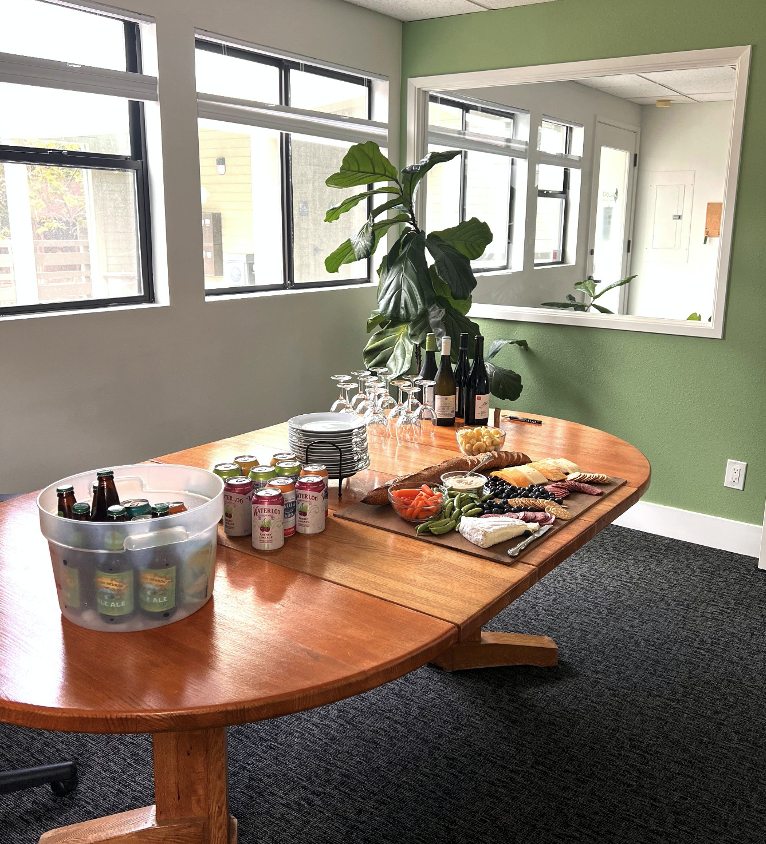
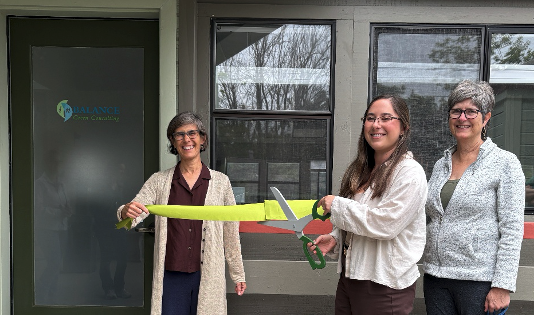
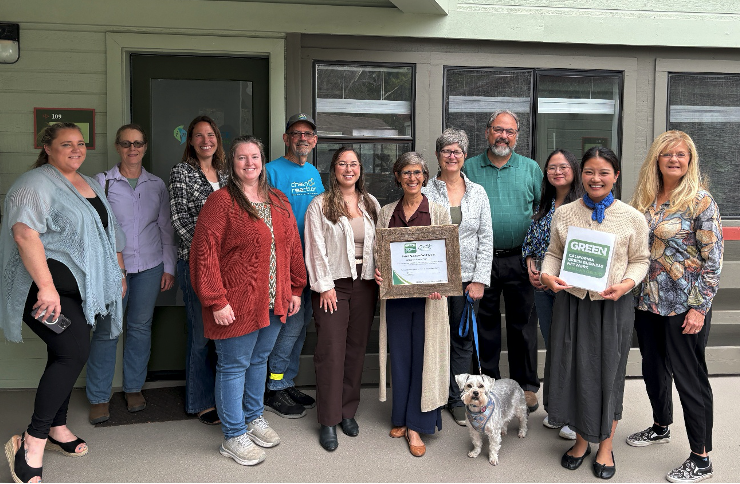
A big thank you to ECOSLO and everyone who came out to our Open House and Green Ribbon Cutting to celebrate In Balance becoming a certified Green Business!

The SLO Green Business Program provides a great opportunity and free assistance for businesses to assess and optimize operations to meet overall climate goals. Check out the California Green Business Network website for more information and to find other local green businesses!