Cal Poly Tech Park Earns LEED Silver

Cal Poly San Luis Obispo recently opened Tech Park 2, a LEED Silver certified building at the Cal Poly Technology Park. According to Cal Poly Partners, the new two-story, 16,200-square-foot facility “is designed to enhance collaboration between Cal Poly students and industry partners while advancing the university’s Learn by Doing mission.”
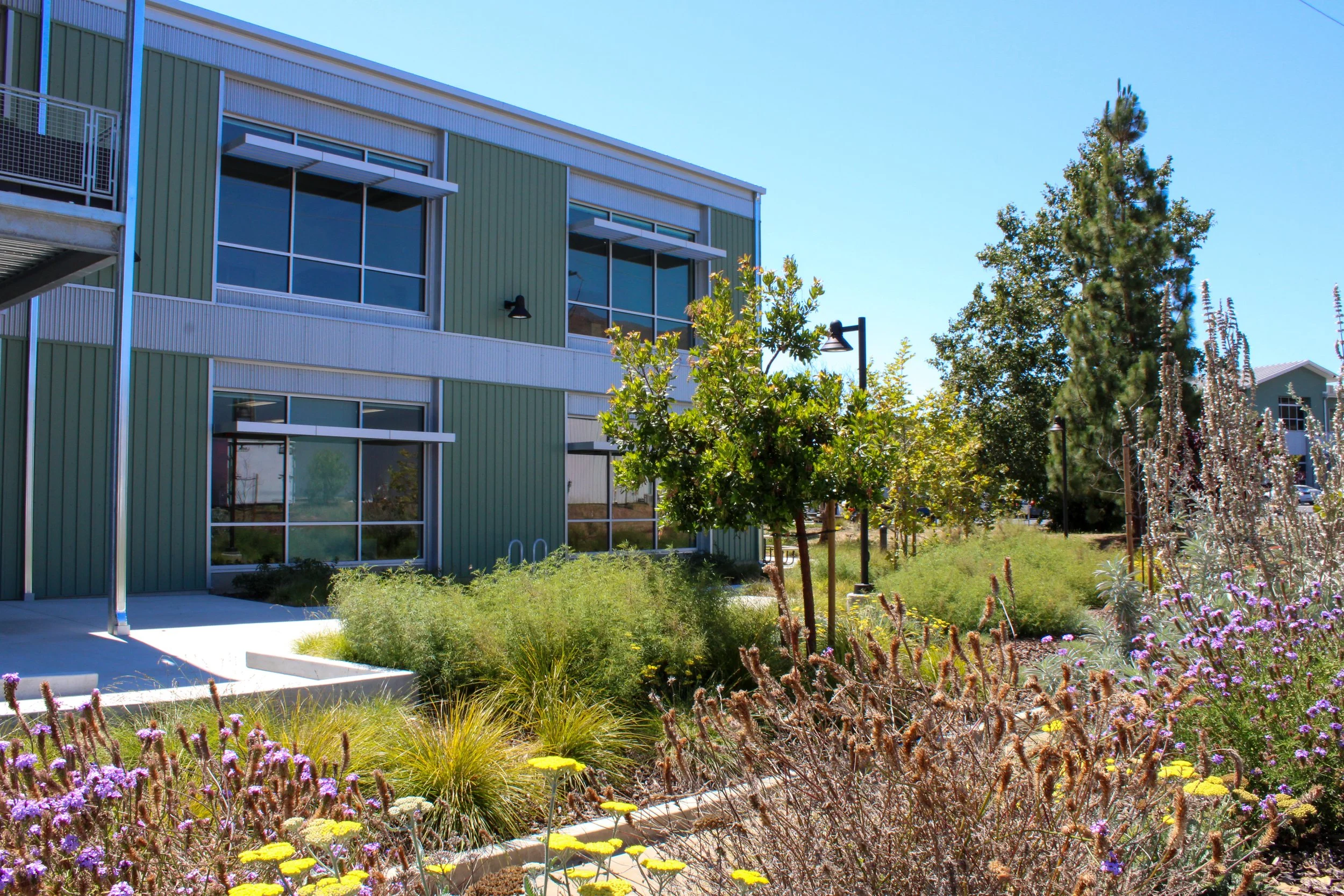
Tenants in the building include SLO County Fire/CAL FIRE, the Cal Poly Wildland-Urban Interface Fire Institute, the U.S. Geological Survey California Water Science Center, Harrow Services – Career Consulting and The Forward Thinking Company.

Sustainability features include an energy efficient envelope and glazing, all-electric systems, great daylight and views and utilization of the campus’s large photovoltaic system to offset more than 50% of its energy use.
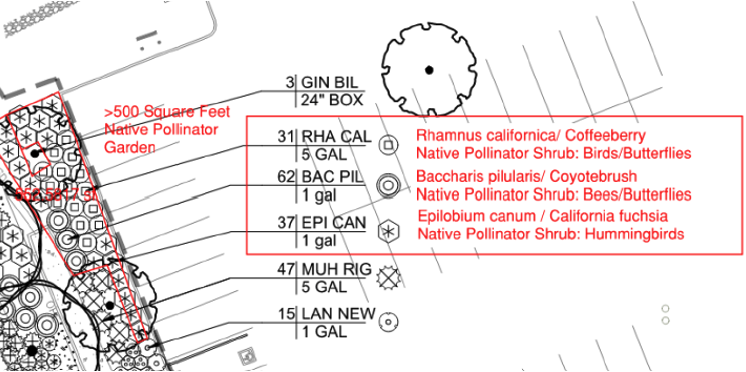
Notably, the project also earned 8 of 10  LEED points in the Sustainable Sites category. Rainwater is managed on site, routing to natural bioswales and allowing the water to recharge the groundwater. Exterior lighting is shielded to prevent night sky pollution. The roof and paving are light colored to reflect light and reduce the heat island effect. And the landscaping consists of native and adapted plant species, including special areas designed to attract butterflies, bees and other native pollinators.

Congratulations to everyone on the team!

  • Owner: Cal Poly Partners

  • Architect: 19-Six

  • Builder: AMG

  • Landscape Architect: KTUA

  • Civil Engineer: DPSI

  • LEED Administration: In Balance Green Consulting
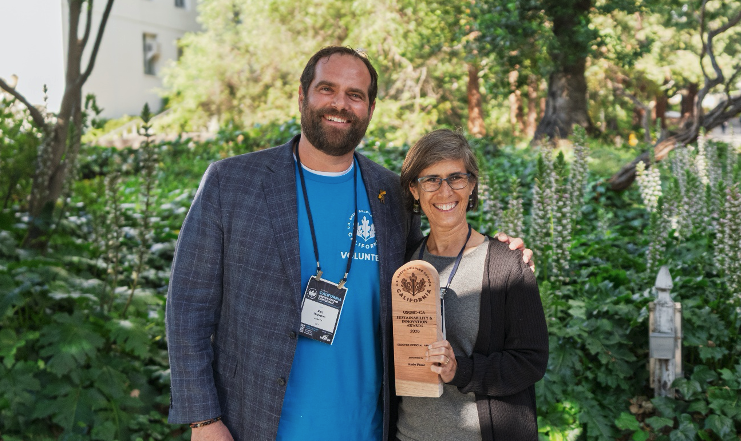


Andy Pease Receives Civic Leadership Award at USGBC-CA Conference

On May 28, 2026, at its 25th Annual California Green Building Conference, USGBC California (USGBC-CA) presented their annual Civic Leadership awards, including one to In Balance Green Consulting Principal, and former City Council Member, Andy Pease.
USGBC-CA CEO Ben Stapleton presented the award with the following comments:

Elected Official Award: Andy Pease, AIA, LEED AP BD+C. The award recognizes bold leadership in sustainability from the political and public service sector. Former City Council Member, San Luis Obispo, Andy is co-owner of In Balance Green Consulting, which optimizes green building strategies in the Central Coast region, including LEED administration and certification services, energy performance modeling and water conservation strategies. During her eight years on city council, the City of San Luis Obispo achieved milestones in housing construction and affordability, bike and pedestrian-focused infrastructure, new programs for inclusion and belonging and an innovative Climate Action Plan that targets carbon neutrality by 2035.

Congratulations, Andy!

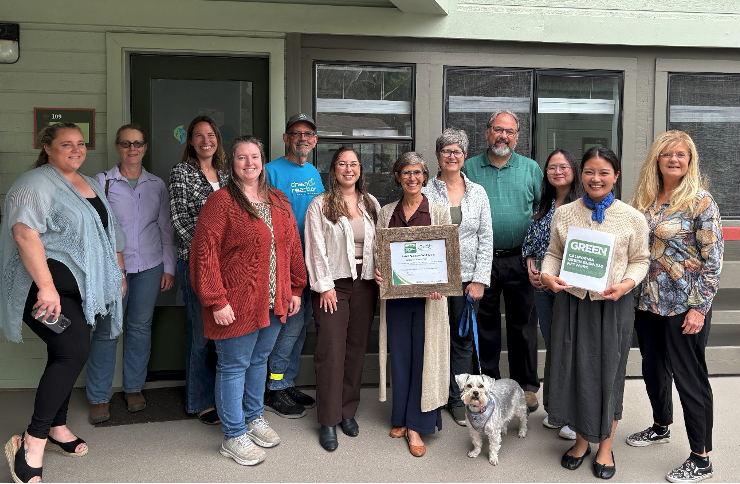
In Balance is Green Business Certified!

We are very excited to announce that In Balance Green Consulting is officially Green Business Certified through the SLO County Green Business Program! The SLO County Green Business Program is part of the statewide California Green Business Network (CAGBN), which aims to recognize small- to medium-sized businesses for implementing business practices that improve operations, cut costs, and reduce their environmental impact. While our day-to-day work typically focuses on green building in a project’s design, going through this certification process helped us assess our current operations, and find some gaps and opportunities for improvement.

Similar to other green building checklists, like LEED or GreenPoint Rated, the Greenbiz Tracker takes teams through categories including energy, pollution prevention, solid waste, transportation, wastewater, water, and community. To comply with the checklist, teams must meet the applicable core measures and select elective measures to reach a points threshold.

Many measures on the checklist were already part of our regular office operations. Some examples include installing LED lighting, using reusable dishware in the break area, using ENERGY STAR appliances, and sourcing previously used furniture. Some of our current practices are energy efficient but don’t align with the program suggestions. For example, while many spaces benefit from lighting controls like occupancy sensors, our office benefits from ample daylighting, so most of the time we are in the office, our lights stay off! Using an occupancy sensor in our case would result in higher energy use. The program allows flexibility in measures like this, accommodating the unique circumstances.

In addition to accounting for our current practices, we also made some changes. We switched to 100% renewable energy through Central Coast Community Energy (3CE)! Now, not only is our office all electric, but we are also supporting a cleaner California grid by reducing the greenhouse gas emissions associated with our operational energy use.

As an office within a larger building, there were certain measures within the scope of our office, while others addressed more building-wide policies. Instead of marking those as “not applicable”, we sat down with our building manager to understand some of the current building operations and see if any changes could be made. One measure that we discussed was regularly scheduling HVAC maintenance, including routinely cleaning and replacing filters. Ironically, this is something that comes up in many of our projects to ensure clients know that filters need to be accessible. Because of our meeting with the building manager, regular maintenance became a policy for every office within the building.

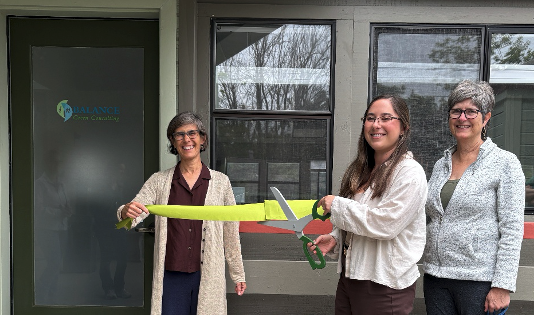
A big thank you to ECOSLO and everyone who came out to our Open House and Green Ribbon Cutting to celebrate In Balance becoming a certified Green Business!

The SLO Green Business Program provides a great opportunity and free assistance for businesses to assess and optimize operations to meet overall climate goals. Check out the California Green Business Network website for more information and to find other local green businesses!

Installing a New HPWH in a Closet or Cabinet? Some Dos, Don'ts, and Other Tips

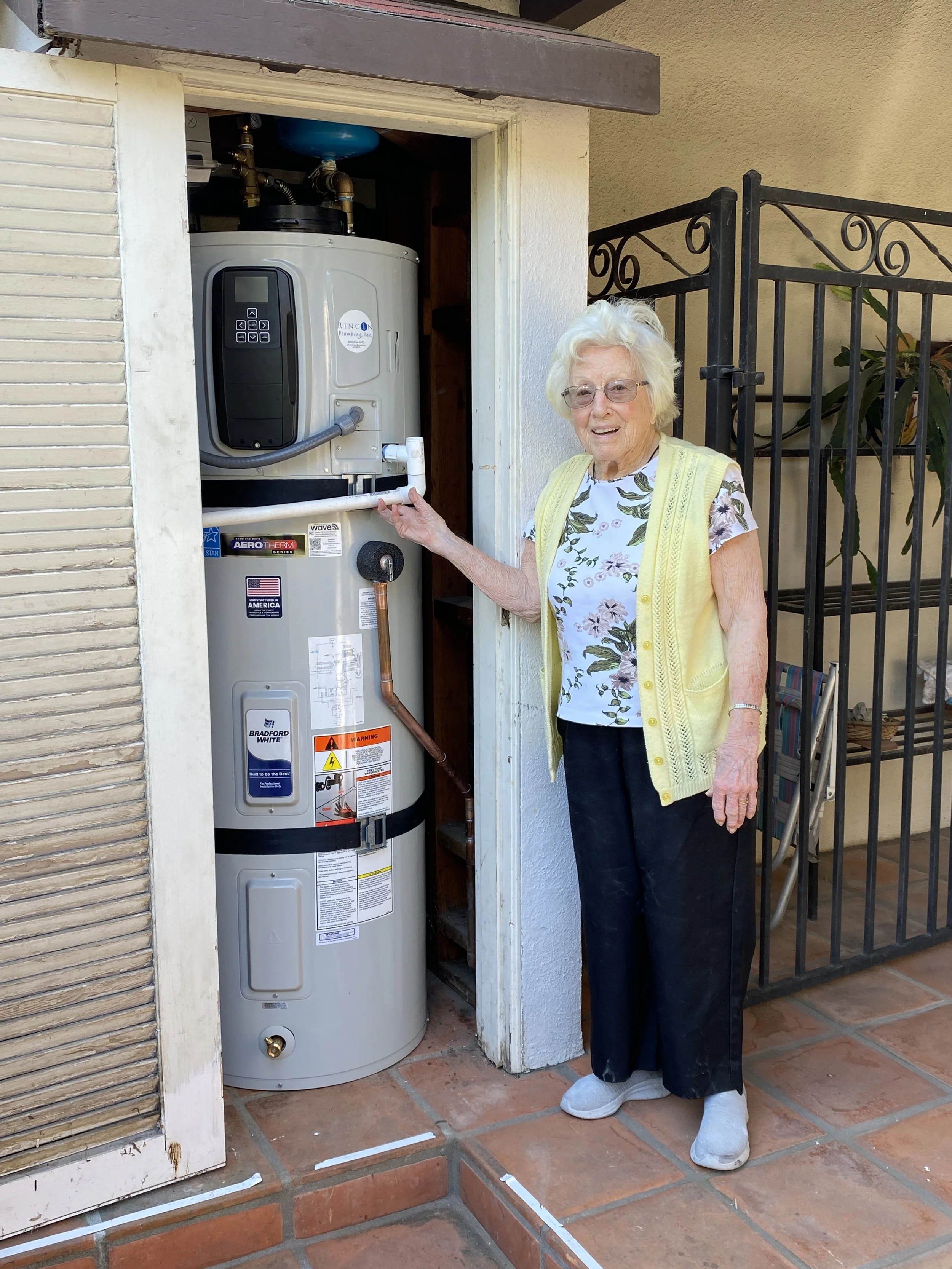
In theory, swapping out a water heater is pretty easy, especially when you exchange like for like. However, replacing electric resistance or gas with heat pump water heaters (HPWH) can lead to a few wrinkles, especially when you have limited space. With the right information and knowledgeable tradespeople, these can be surmounted. Just ask our 103-yr old neighbor! [More on her experience below.]

By now, most of us know that heat pump water heaters are highly efficient, up to four times better than their conventional electric resistance precursors. They are on par with high efficiency on-demand gas units and can cost about the same to operate depending on natural gas prices - providing a key ingredient for any project that is targeting all-electric status. On top of that, they provide cooling and dehumidification for the surrounding spaces, reduce greenhouse gas emissions, and many are eligible for a variety of incentives.

On the other hand, real barriers do exist to making the switch including cost, timing, electrical capacity, and equipment location. Add in code requirements for ventilation, and the average customer who just wants their hot water back is tempted to go with “easy”.

All of this was in play for our neighbor, yet with a little support and a small upcharge, she is now the proud owner of a new 50 gallon HPWH.

Lessons learned

1. Know where to look for incentives

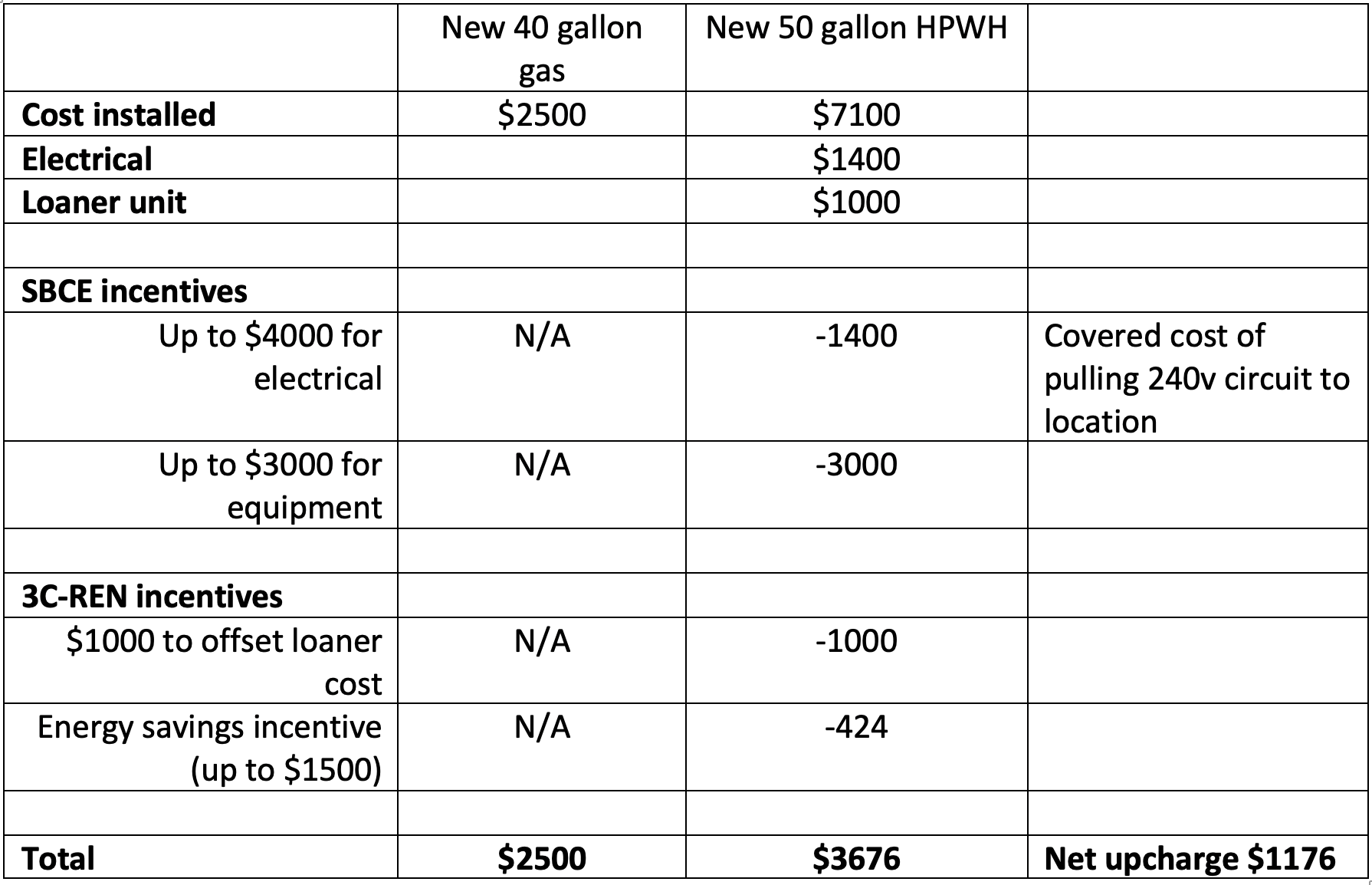
Check your utility bill and contact your electricity provider to see what they offer. The Tri-County Regional Energy Network (3C-REN) is also running their Home Energy Savings incentive program. In our neighbor’s case, she reached out to Santa Barbara Clean Energy (SBCE) and learned that they provide assistance with permitting (instant and free), as well as incentives of $500-3500 based on equipment being replaced, with an additional $2000-4000 available for associated electrical work. 3C-REN provided an additional $500 incentive based on energy savings. The Switch is On is also a valuable statewide resource.

2. Find knowledgeable tradespeople

Most incentive programs maintain lists of participating contractors. In this case, a quick look through SBCE’s list identified 2 plumbing firms that specifically worked on HPWHs in her area. Contacting them led to connections with electricians and a water heater loaner program that bought (via $1000 for the contractor) everyone some time to make the decisions that were right for the project.

3. Check the codes and requirements

·  Equipment size: Be sure to check the equipment dimensions and clearances on the equipment you plan to use.

Initially our neighbor wanted a 50 gallon 110v unit, for lower cost and ease of installation (there was already a 110v circuit in place). However, the tank diameter was too large for the existing exterior cabinet doorway. It is common for 110v units to make up for a lack of backup electric resistance heating with a larger tank.

·  Electrical: Take a comprehensive look at your electrical capacity and circuitry, then look for incentives if needed.

Switching to 240v unit was our neighbor’s next option. The unit fit the cabinet, but it would present additional costs for the equipment and, potentially, for a new circuit. Concern that her 100-amp panel would need to be upgraded was allayed when a savvy electrician realized there was an unused 240v circuit wired for the dryer (hers is gas!). The wiring was just rerouted to the water heater location.

·  Code requirements:  While clearances for HPWHs are generally less than for gas equipment and exhaust ducting can be avoided, there are requirements for available air intake volumes (aka ventilation) and plumbing insulation that need to take a cabinet or closet install into consideration.

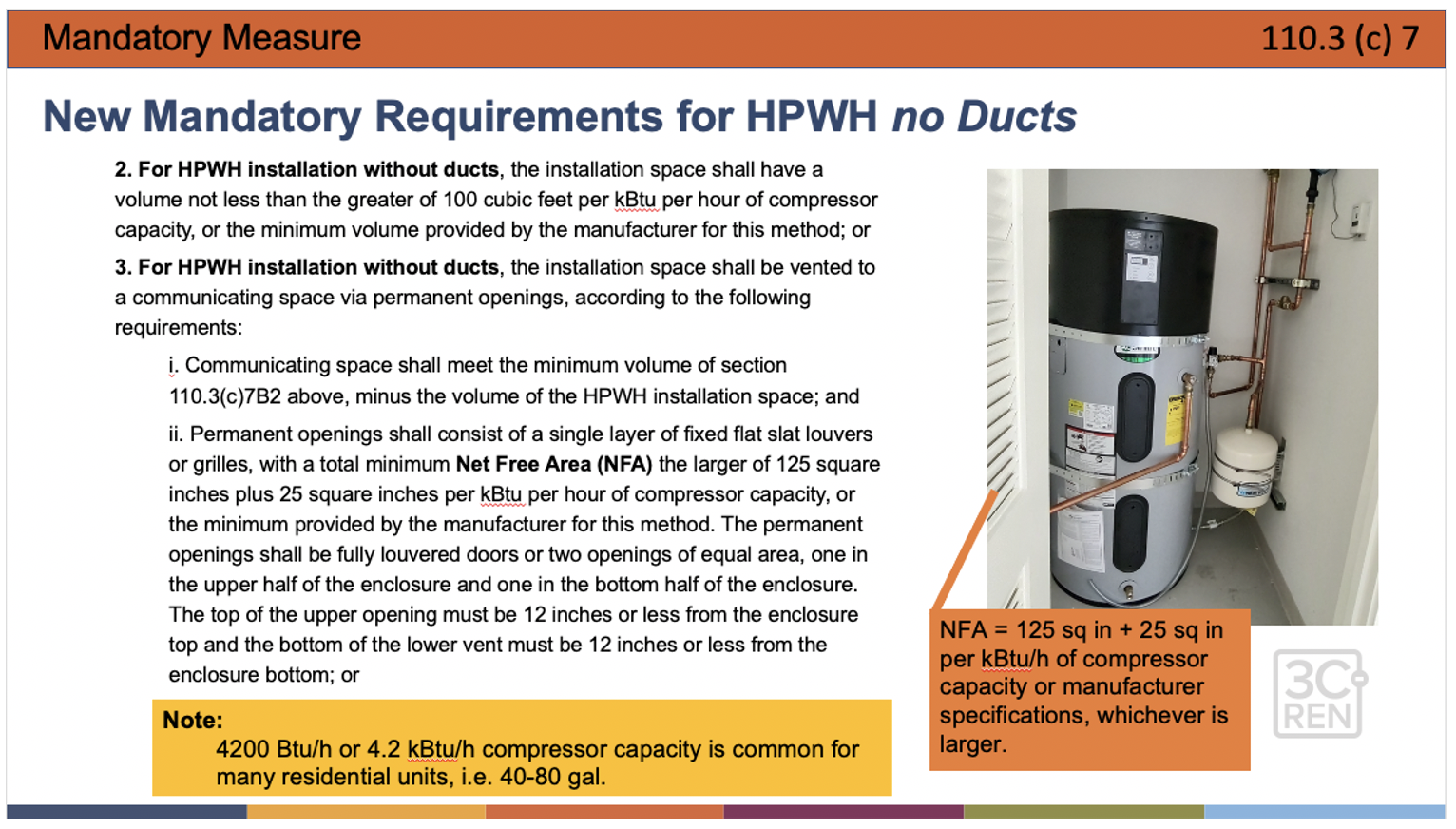
The 2025 code requires either:

1. A minimum of 100 cubic feet per kBtu per hour of compressor capacity for intake air. This is typically about 420 cubic feet, so garages can be good options.

OR

2. Venting to communicating space via permanent openings (usually louvered doors, but it can be through ducting) per the Net Free Area calcs below.

Our neighbor installed her HPWH in an exterior cabinet with a 15” wide fully louvered door, plus some side vents, that allowed it to just meet the ventilation requirements.

For piping insulation, the key is that all hot water piping shall be insulated per Chapter 6 Section 609.11. Piping surrounded with a minimum of 1 inch of wall insulation, 2 inches of crawl space insulation, or 4 inches of attic insulation, are not required to have pipe insulation.


4. Do the math -

Of course, every project presents different challenges and opportunities. For this one, the math worked out well to support switching to a HPWH.

A new standard 40 gallon gas heater was priced at $2500.

The final cost for the 50 gallon HPWH (240v) installed came to $7100.

This is quite a difference, until the incentives our neighbor qualified for are taken into account.

All told, it cost an extra $1176 to install the HPWH. This could have been reduced a further with more qualifying energy savings under 3C-REN’s incentive, but was limited by the overall household energy use.  Our neighbor’s reaction, “You’ve got to do what you can!”